
How Much Does Breast Augmentation Cost? The Complete 2026 Price Breakdown
.jpg)
Breast augmentation in 2026 typically costs between $5,000 and $12,000 nationally, but that one number doesn't tell the whole story. There are seven key variables and a handful of hidden fees that can significantly affect your final price. Understanding what goes into the total helps you plan smarter, compare quotes accurately, and avoid the sticker shock that catches a lot of patients off guard.
Most people researching breast implant costs zoom in on the bottom-line number, but that figure is actually a mix of implant brands, surgical techniques, facility fees, and post-op care all rolled together. The 2026 pricing landscape also reflects inflation and newer implant technologies that offer improved safety profiles and better aesthetic outcomes.
This guide breaks down every variable that affects your price, surfaces the hidden expenses nobody warns you about, and walks you through financing options (including how Bliss's concierge model helps you compare all-in costs across different markets).
The 7 Things That Drive Your Final Price
Your breast augmentation price depends on seven interconnected factors. Here's what each one actually means for your wallet.
1. Implant type and brand
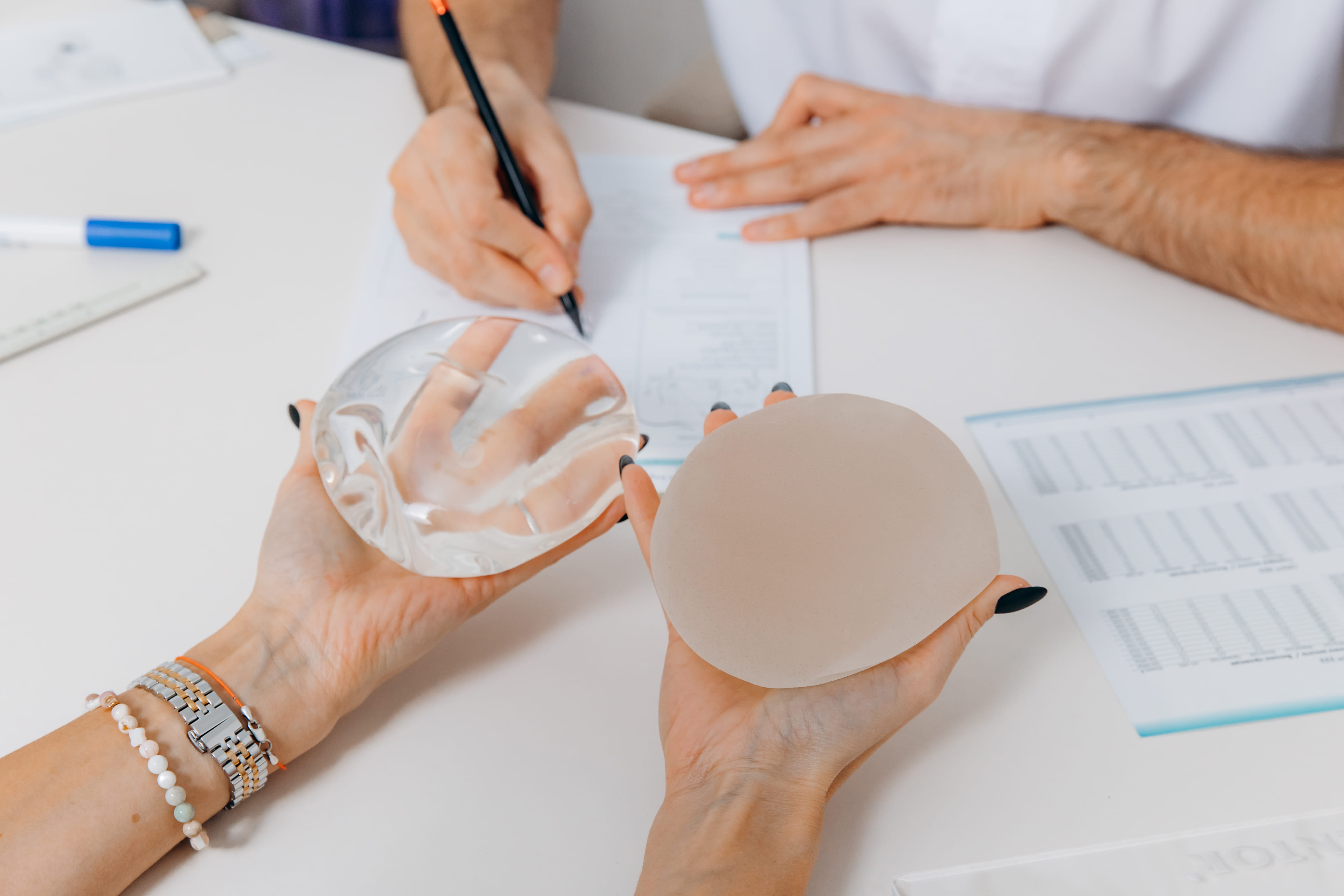
This is where the biggest price swings happen. Silicone gel implants typically run $5,000 to $9,000 for the total procedure, while saline comes in at $4,500 to $7,500. The implant devices themselves add $1,200 to $1,800 (silicone) or $500 to $800 (saline) on top of the surgeon's base fee. Premium options like Motiva implants can run $1,500 to $2,200 just for the device because you're paying for features like SmoothSilk nanotextured surfaces and RFID-based implant identification technology.
The trade-off? Silicone feels more natural and resists rippling better. Saline costs less upfront and needs a smaller incision since the implants are filled after insertion. Your choice should balance your budget, the feel you want, and what you're comfortable with for long-term maintenance.
2. Surgical approach
Where the implant sits in your body affects both the price and the result. Submuscular placement (under the pectoralis muscle) typically adds $500 to $1,500 to your total compared to subfascial placement (above the muscle but under the fascia). The extra cost comes from longer surgical time and greater technical complexity.
The submuscular approach does come with advantages: less visible rippling and better mammography results, which is why many board-certified surgeons prefer it despite the higher price tag.
3. Where you live (or where you're willing to travel)
Geographic price differences are real. High-demand markets carry higher facility fees, staff costs, and malpractice insurance, while cities with more competition among surgeons can drive prices down.
This is why some patients consider traveling for their procedure. You might find a great surgeon in a lower-cost market without sacrificing quality. Bliss's concierge service helps you compare all-in costs across cities and match with board-certified surgeons wherever they are.
4. Surgeon experience and credentials
You get what you pay for here. A surgeon with 15 years of breast augmentation experience and fellowship training will charge more than someone recently board-certified. That premium reflects skill, lower revision rates, and peace of mind.
Key questions to ask: How many breast augmentations do you perform per year? What's your revision rate? Are you board-certified by the American Board of Plastic Surgery?
5. Facility type
Accredited surgical centers all meet strict safety standards, but overhead varies. Ambulatory surgical center fees run $1,500 to $3,000, while a hospital setting can add $3,000 to $5,000. Look for accreditation by organizations like the AAAASF (American Association for Accreditation of Ambulatory Surgery Facilities), which signals rigorous infection control and emergency protocols. Bliss verifies that every surgeon in the network operates in accredited facilities.
6. Anesthesia
General anesthesia is standard for breast augmentation and typically costs $800 to $2,000, depending on the provider and how long your procedure takes. Both board-certified anesthesiologists and CRNAs deliver safe care, and your surgeon selects the anesthesia team based on your procedure's complexity and facility protocols.
7. What's included in post-op care
This is where quotes can get sneaky. Some surgeons include all follow-up visits in the initial fee; others charge per appointment. Revision policies are all over the map: a few practices offer one free revision within the first year, while others bill separately for any adjustment.
A slightly higher upfront quote that includes unlimited follow-ups and a clear revision policy often delivers better value in the long run. Bliss's Care Advisors help you ask the right questions so you know exactly what you're paying for.
The Hidden Costs Nobody Warns You About
Here's where a lot of patients get caught off guard. These expenses can add hundreds to thousands to your total budget, and they usually surface after you've already committed.
Pre-op testing
Before surgery, your surgeon will order bloodwork and lab panels to make sure you're healthy enough for anesthesia. These run $200 to $500 and are almost never included in the quoted procedure price. If you're over 35 or have a family history of breast cancer, you may also need a baseline mammogram ($250 to $400).
Bliss's Care Advisors help you navigate these logistics and clarify what's out-of-pocket before you book.
Prescription meds
After surgery, you'll need pain medication, antibiotics, and anti-nausea drugs. Depending on your insurance and pharmacy, plan for $50 to $300 total. Ask your surgeon ahead of time what you'll need so you can budget for it.
Recovery garments
You'll need surgical bras and compression garments for the first 4 to 6 weeks of healing. Each runs $50 to $200, and you'll want at least 2 or 3 so you can rotate while washing. Quality compression garments make a real difference in comfort and results, and your surgeon or Care Advisor can point you toward specific brands.
Long-term maintenance and replacement
Here's the big-picture number most people don't think about: breast implants are not lifetime devices . They may need replacement in 10 to 15 years due to rupture, capsular contracture, or simply wanting a change. The FDA recommends MRI or ultrasound screening starting 5 to 6 years after silicone implant placement, then every 2 to 3 years after that. These imaging studies run $500 to $1,000 each and are rarely covered by insurance.
When replacement surgery does become necessary, expect to pay $3,500 to $15,500 out of pocket, depending on complexity. It's worth factoring long-term maintenance into your budget from the start.
Financing Options That Make It Work
Smart financing can turn a big upfront expense into manageable monthly payments without cutting corners on board-certified care or safety. Here are the main options.
Third-party medical lenders
CareCredit offers deferred-interest plans for 6, 12, 18, or 24 months on qualifying purchases. Pay the full balance within the promo period, and no interest is charged. But here's the important part: if any balance remains after the promotional window closes, interest gets charged retroactively from the original purchase date at the standard variable APR of 32.99%. Read the terms carefully before applying.
Alphaeon Credit provides credit lines up to $25,000 with repayment terms from 12 to 60 months. Promotional reduced-APR plans start at 14.99% for 24-month terms, with rates going up for longer terms. The standard variable APR is 32.99%. Check current terms at Alphaeon's website before applying.
Prosper Healthcare Lending offers APRs from 8.99% to 35.99% with no prepayment penalties. Loan amounts range from $2,000 to $50,000 with terms up to 60 months.
In-house practice financing
Many board-certified surgeons offer payment plans managed directly by their office. These often come with lower rates or deferred-payment terms that don't require third-party credit checks. You'll typically put down a deposit at booking and make monthly payments over 6 to 24 months. Ask whether there are prepayment penalties.
.jpg)
How Bliss helps you find the best deal
Bliss eliminates hidden costs by providing all-in pricing that covers surgeon fees, anesthesia, facility charges, and follow-up care. Your Care Advisor helps you compare quotes across markets, navigate financing options, and understand exactly what's included before you commit. Bliss's financing partners offer 0% interest plans for 12 to 24 months for qualified applicants. Ask your Care Advisor about current terms and eligibility.
Pair that with the Bliss best-price guarantee, and you know the price you see is the best available for that surgeon and procedure.
Frequently Asked Questions
What is the typical breast augmentation price in 2026? Nationally, breast augmentation costs $5,000 to $12,000, with location driving the biggest variation. These figures usually include surgeon fees, implants, anesthesia, and facility charges, but not pre-op testing, prescriptions, or recovery supplies. Always request all-inclusive quotes so you're comparing accurately.
Is financing available for breast implants? Yes. Most board-certified surgeons partner with lenders like CareCredit, Alphaeon, and Prosper Healthcare Lending for flexible payment plans. Many also offer in-house financing. Bliss's financing partners offer 0% interest plans for qualified applicants. Ask your Care Advisor for current terms.
Do silicone implants cost more than saline? Yes. Silicone implants cost about $1,000 more than saline. Silicone totals $5,000 to $9,000 versus $4,500 to $7,500 for saline. The premium reflects manufacturing complexity and the more natural feel silicone provides.
Are consultation fees included in the price? It depends. Some surgeons charge $100 to $300 for initial consultations and credit that toward surgery if you book; others offer free consults. Bliss coordinates consultations at no extra charge.
What's next? Get matched with board-certified surgeons and receive personalized quotes with no hidden fees. Your journey to a confident, informed decision starts here.
FEATURE OF THE WEEK



Subscribe for cosmetic insights.
Get the latest in aesthetic innovation, support, and self-love straight to your inbox.




Lorem ipsum dolor sit amet, consectetur adipiscing elit. Suspendisse varius enim in eros elementum tristique. Duis cursus, mi quis viverra ornare, eros dolor interdum nulla, ut commodo diam libero vitae erat. Aenean faucibus nibh et justo cursus id rutrum lorem imperdiet. Nunc ut sem vitae risus tristique posuere. uis cursus, mi quis viverra ornare, eros dolor interdum nulla, ut commodo diam libero vitae erat. Aenean faucibus nibh et justo cursus id rutrum lorem imperdiet. Nunc ut sem vitae risus tristique posuere.
DeleteLorem ipsum dolor sit amet, consectetur adipiscing elit. Suspendisse varius enim in eros elementum tristique. Duis cursus, mi quis viverra ornare, eros dolor interdum nulla, ut commodo diam libero vitae erat. Aenean faucibus nibh et justo cursus id rutrum lorem imperdiet. Nunc ut sem vitae risus tristique posuere. uis cursus, mi quis viverra ornare, eros dolor interdum nulla, ut commodo diam libero vitae erat. Aenean faucibus nibh et justo cursus id rutrum lorem imperdiet. Nunc ut sem vitae risus tristique posuere.
Delete